Recent proposals at the federal, state, and local level are pushing for increasingly higher minimum wage rates. A majority of these efforts more than double the existing minimum wage, raising the mandate up to $15 in places like Oklahoma, Virginia, and Pennsylvania, while a bill in Congress proposes a $25 federal minimum wage, and other areas have proposed as high as $30 per hour.
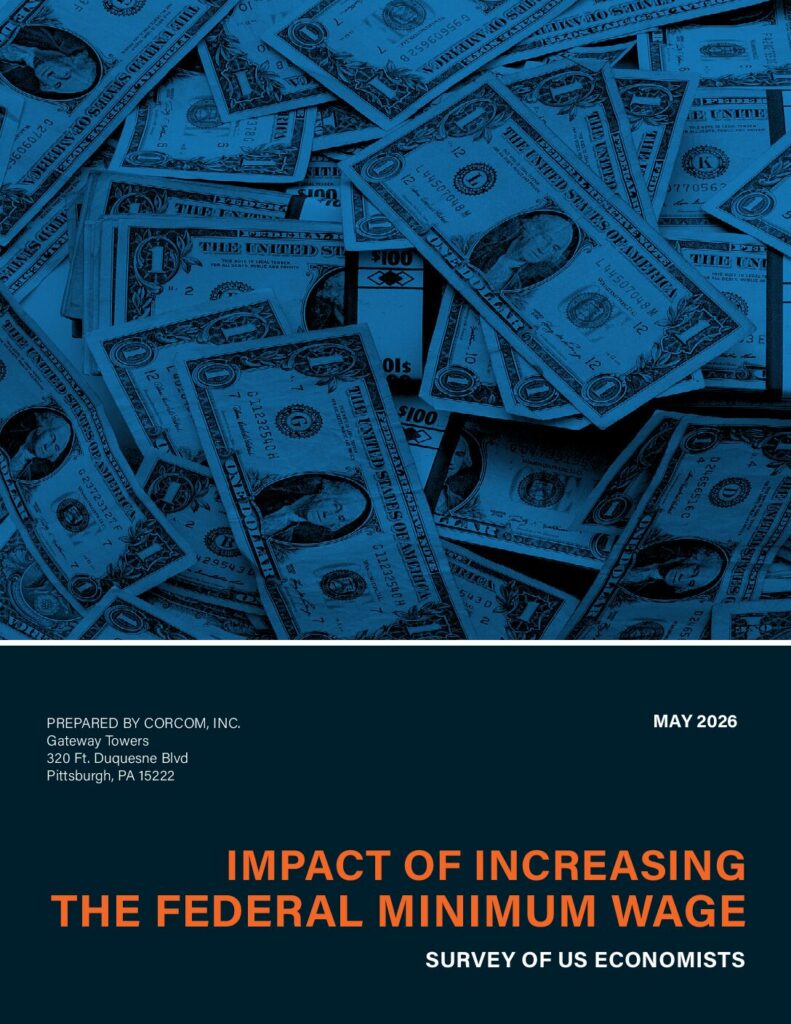
To understand what today’s experts think about these varying proposals, EPI commissioned a survey of 166 American economists in March and April 2026.
Nearly three-quarters of economists oppose a $15 federal minimum wage.
Opposition rises for higher wage targets: 90% oppose a minimum wage up to $20 per hour, and 96% oppose more than $20 per hour.
Ineffectiveness at addressing poverty.
Roughly three-fourths (74%) of economists say raising the minimum wage is ineffective at lifting workers out of poverty, and a majority believe there are better policies to address poverty concerns.
Widespread negative impacts of a $15+ minimum wage.
For minimum wage mandates of $15 per hour and above, surveyed economists agree these proposals will cause several negative consequences, including increasing prices and inflation, reducing jobs available for youth and those in the hospitality industry, pushing businesses to turn toward automation, and making it harder for small businesses to operate. Economists’ concern about these issues grows when presented with higher minimum wage proposals.
Concerns about eliminating the tip credit.
A large majority of economists also agree eliminating the federal tip credit – an allowance to count tip earnings toward the hourly minimum wage requirement – would result in fewer tipped jobs like servers and bartenders in full-service restaurants.
This study conducted by CorCom, Inc., a research consulting firm headquartered in Pittsburgh, PA. It was founded by Dr. Lloyd Corder, who holds faculty appointments at Carnegie Mellon University and the University of Pittsburgh. See the full survey methodology and results here.